Chapter 6 of 8
Try Your First Tarot Spreads
Give each card a role in a one-card or three-card reading.
About 5 min read · Practice at your own pace
In this chapter Complete a reading using the stated card positions.
On this page
Give each card a role
A spread gives each card a role. In a one-card reading, that role might be “Your focus.” With three cards, you can give each one a different question and consider how their themes connect.
Set the roles before drawing. This helps you interpret each card in relation to its position, especially when several meanings could fit.
These web lessons follow the InnerSigns tool: Past, Present, and Next step. Other spreads, including the manuscript’s Situation / Insight / Next step exercise, assign different roles. Follow the positions you set before drawing.
A complete one-card reading
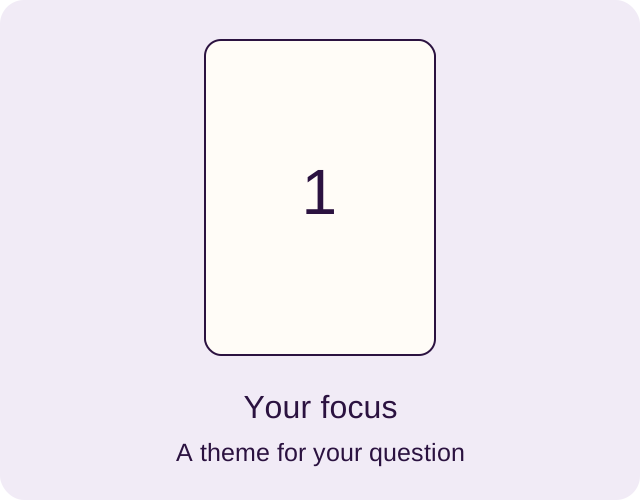
One position, one theme to consider. This is a layout diagram, not a drawn card.
InnerSigns learning diagramsChoose one ordinary situation. Keep your question beside the card while you work through these six steps.
- Write one focused question and any relevant known facts.
- Set the position: Your focus. The card offers a theme to consider in relation to your question.
- Shuffle and draw, or reveal one digital card. Use the upright orientation for this practice.
- Describe a visible detail, then consult an upright meaning in your reference.
- Explain a possible connection to your question and circumstances.
- Record an optional action, including no action for now, and anything still unknown. Close the reading.
One card: preparing for a conversation

Strength is the deliberately chosen focus card for this imagined housemate conversation.
InnerSigns card libraryPast, Present, Next step
When you want to explore a little more, set three positions from left to right before drawing. Read each card in its own position, then consider how the themes connect.
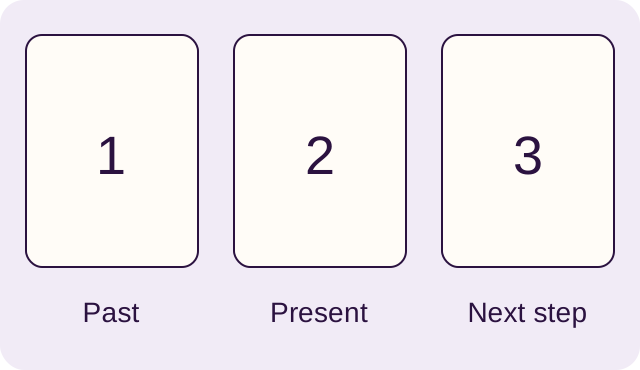
Set positions before drawing. The third position explores a possible step.
InnerSigns learning diagrams- 1 · Past
- What known experience might be shaping how I approach this question? Use context you actually know; a card cannot establish a hidden past event.
- 2 · Present
- What theme could help me reflect on what is happening now? Compare the interpretation with current facts.
- 3 · Next step
- What possible action could I explore? Check whether it is useful and realistic. This position is not a prediction.
Write your main question and assign one card to each role. With physical cards, lay them out left to right. With the digital tool, follow the displayed positions. You can also study the fixed example below without making a draw.
Three cards: considering an opportunity
Imagined teaching scenario: you felt disengaged in a previous role. You are now taking a course to develop a skill, and a new role interests you. You have time to ask the hiring contact about its requirements.
How could I approach this opportunity thoughtfully?
The following three cards were deliberately chosen to explain the positions. They are not promised results from the reading tool.
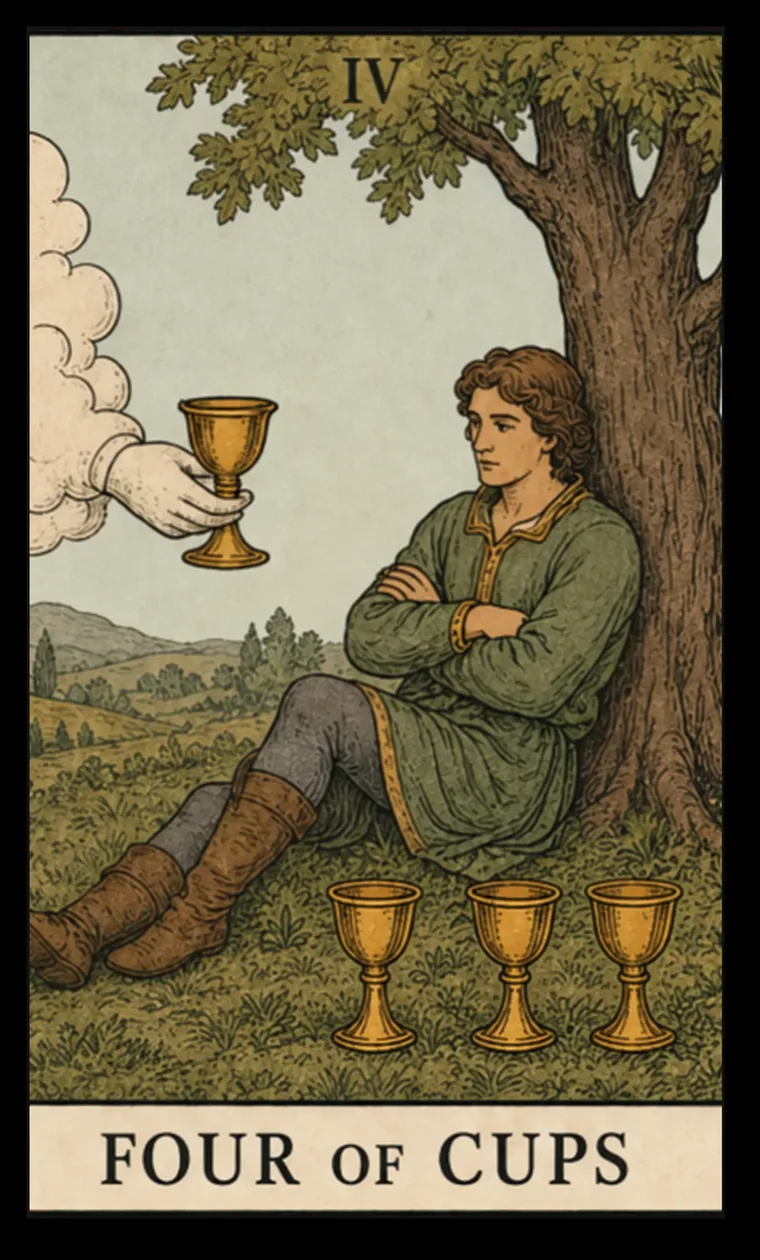
1 · Past — Four of Cups. InnerSigns study artwork, with three cups on the ground and one offered from a cloud.
InnerSigns · AI-assisted illustrationA seated figure has their arms folded beneath a tree. Common themes include contemplation and reevaluation. In the Past position, you might consider how your known dissatisfaction with the previous role shapes your hesitation now. The dissatisfaction comes from the scenario; the card does not reveal it.
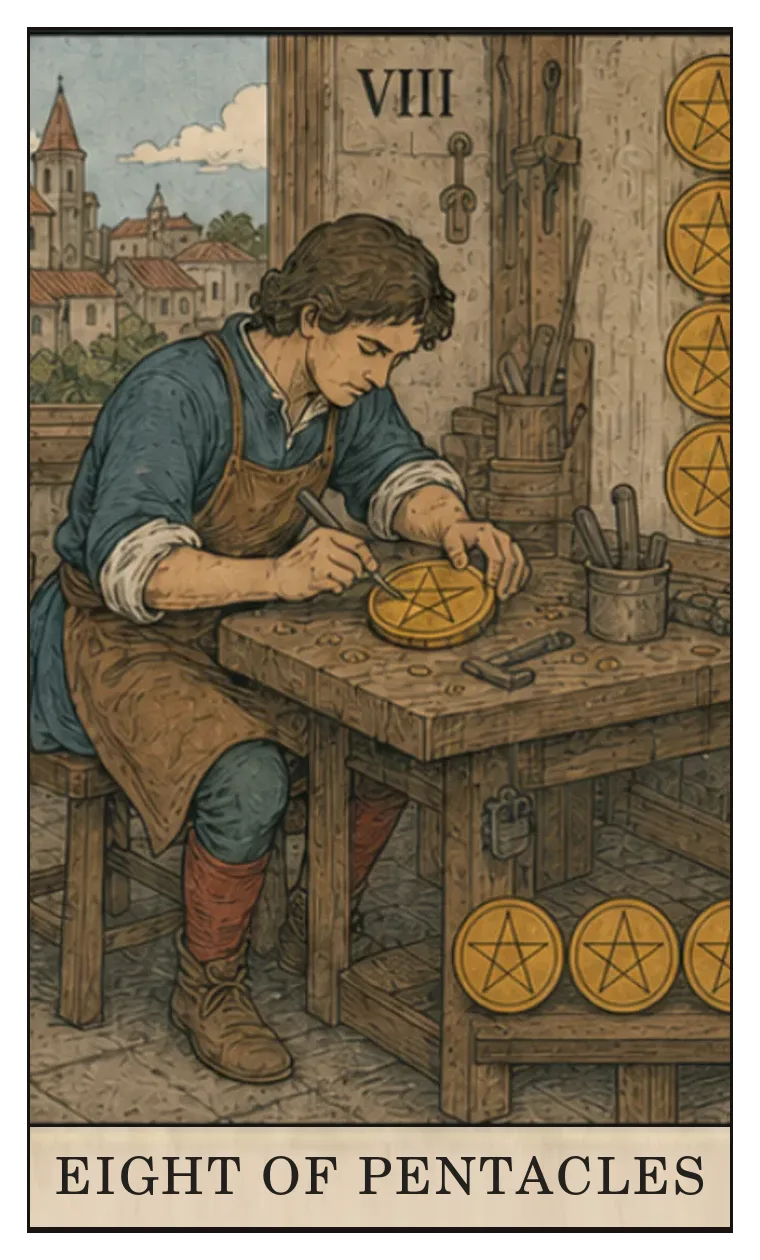
2 · Present — Eight of Pentacles. A worker attends to a pentacle at a workbench.
InnerSigns card libraryPractice and craftsmanship are useful themes here. In the Present position, consider the course you are already taking: what are you learning, and which requirements of the new role still need checking? This keeps the interpretation close to what is happening now.
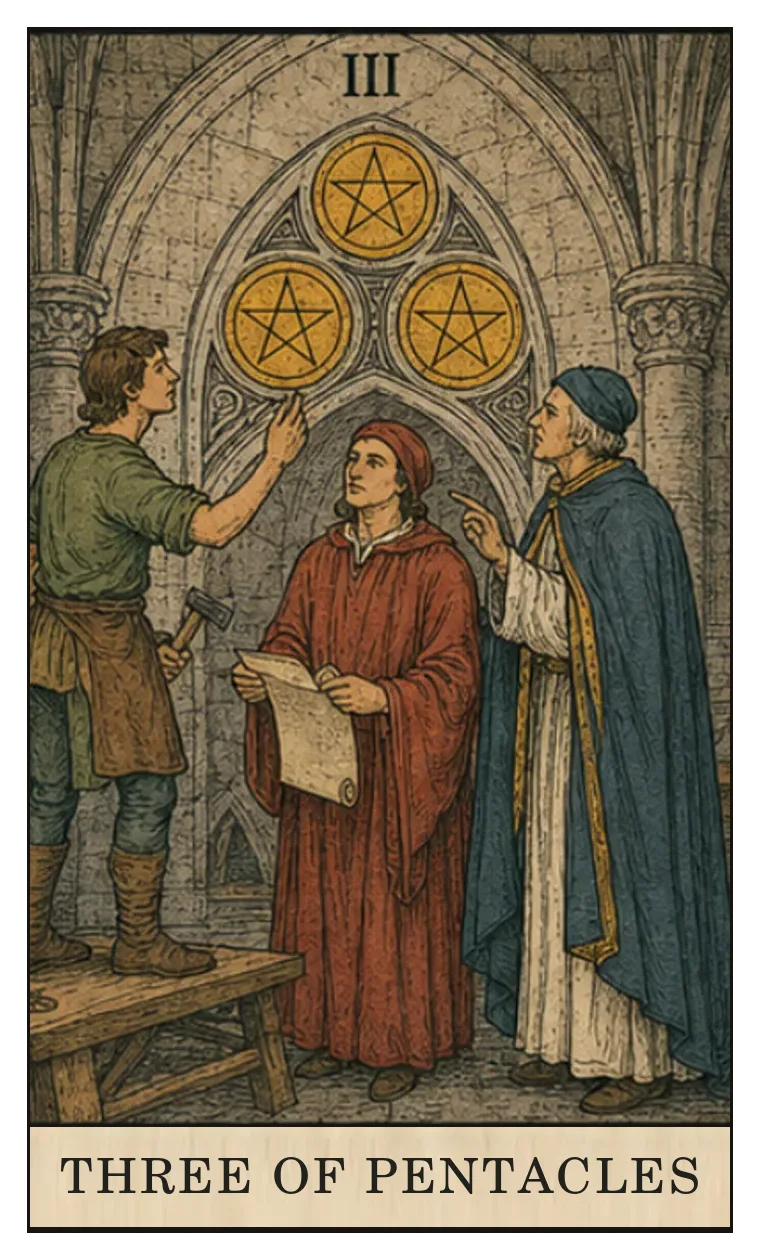
3 · Next step — Three of Pentacles. A craftsperson and two other figures gather beneath three pentacles.
InnerSigns card libraryA common theme is skilled collaboration. One possible next step is a conversation with the hiring contact about the work, expectations, and available support. Reviewing the description with a trusted colleague could also be useful.